



Read Time: 5 mins | Written by: FutureYou Health Team | Reviewed by: Dr Miriam Ferrer, Head of Product Development | How we research and check our articles
Co-enzyme Q10, or CoQ10, is also known as 'ubiquinone' and is a fat-soluble substance that is similar to a vitamin. Its name derives from "ubiquitous quinone", as this molecule is found in most of the cell membranes of the body, particularly within organ tissues with high metabolic demands.
Key takeaways: What you need to know about CoQ10
- Cellular fuel: CoQ10 is a vitamin-like co-factor concentrated in mitochondrial membranes, responsible for generating 95% of the body’s cellular energy (ATP).
- Natural depletion: The body's internal CoQ10 production declines rapidly after age 40 and is significantly suppressed by cholesterol-lowering statin medications.
-
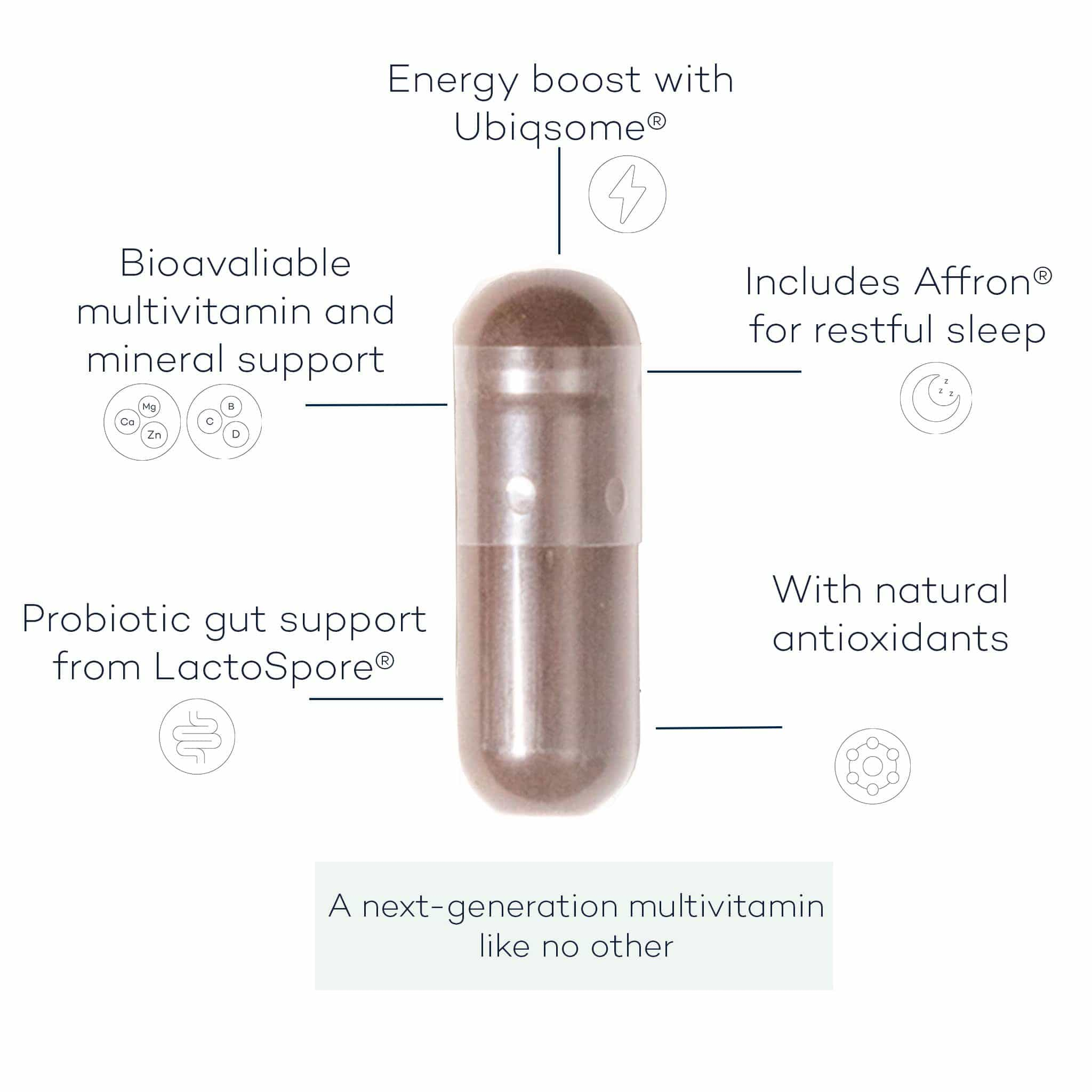
Absorption barrier: Standard raw CoQ10 powders dissolve poorly in gut fluids. Formulations using Ubiqsome® phytosome technology deliver 9x higher absorption directly into bloodstream and muscle tissue.
The science
CoQ10 is a central component of the process that creates energy in the mitochondria, the powerhouse of our cells. The production of energy (in the form of ATP – adenosine triphosphate) depends on CoQ10, so the highest CoQ10 levels are found in cells with high energy requirements, in our brain, heart, liver, and kidneys, for example. (1)
CoQ10 can be found in the oxidised form (what we call ubiquinone) and in the reduced form (known as ubiquinol). This conversion between the oxidised-reduced states is what allows it to act as cofactor of the enzymatic reactions that take place in the mitochondria in order to produce energy.
Energy production is not the only function of CoQ10. It also acts as a powerful antioxidant and is particularly good at preventing lipid peroxidation, the process by which free radicals damage our lipid cell membranes. This can have a beneficial effect on atherosclerosis prevention, as well as helping with maintaining the antioxidant activity of vitamin E and vitamin C. (1)
What are the sources of CoQ10?
CoQ10 is the only fat-soluble antioxidant that can be produced by our body. CoQ10 is present in all the cells of our body, and its production is controlled by the same pathway (the mevalonate pathway) that controls cholesterol synthesis.(2)
Our ability to produce CoQ10 peaks between the ages of 20 and 30 and declines significantly after age 40, when we need to rely more on external sources, such as a supplement. Statins, which are commonly prescribed to people with high cholesterol, block CoQ10 production and contribute to reduced CoQ10 levels later in life. (3) To replenish reserves, consider exploring specialised bioavailable CoQ10 supplements.
Diet
CoQ10 is present in many animal protein sources, vegetables, fruits and cereals. Since CoQ10 is mainly found in high energy-demanding tissues, animal hearts and livers represent the richest sources (4), providing around 3mg to 6mg per daily diet. These, however, are some of the types of foods that many of us no longer prefer in our diet.
Supplements
Since our body makes most of the CoQ10 we need in early adulthood, supplementary intake of CoQ10 won’t make much difference to younger individuals. However, people over 40, those who are taking statins, or those who suffer from conditions that can affect CoQ10 synthesis, could probably benefit from CoQ10 supplementation to help replenish their levels(4).
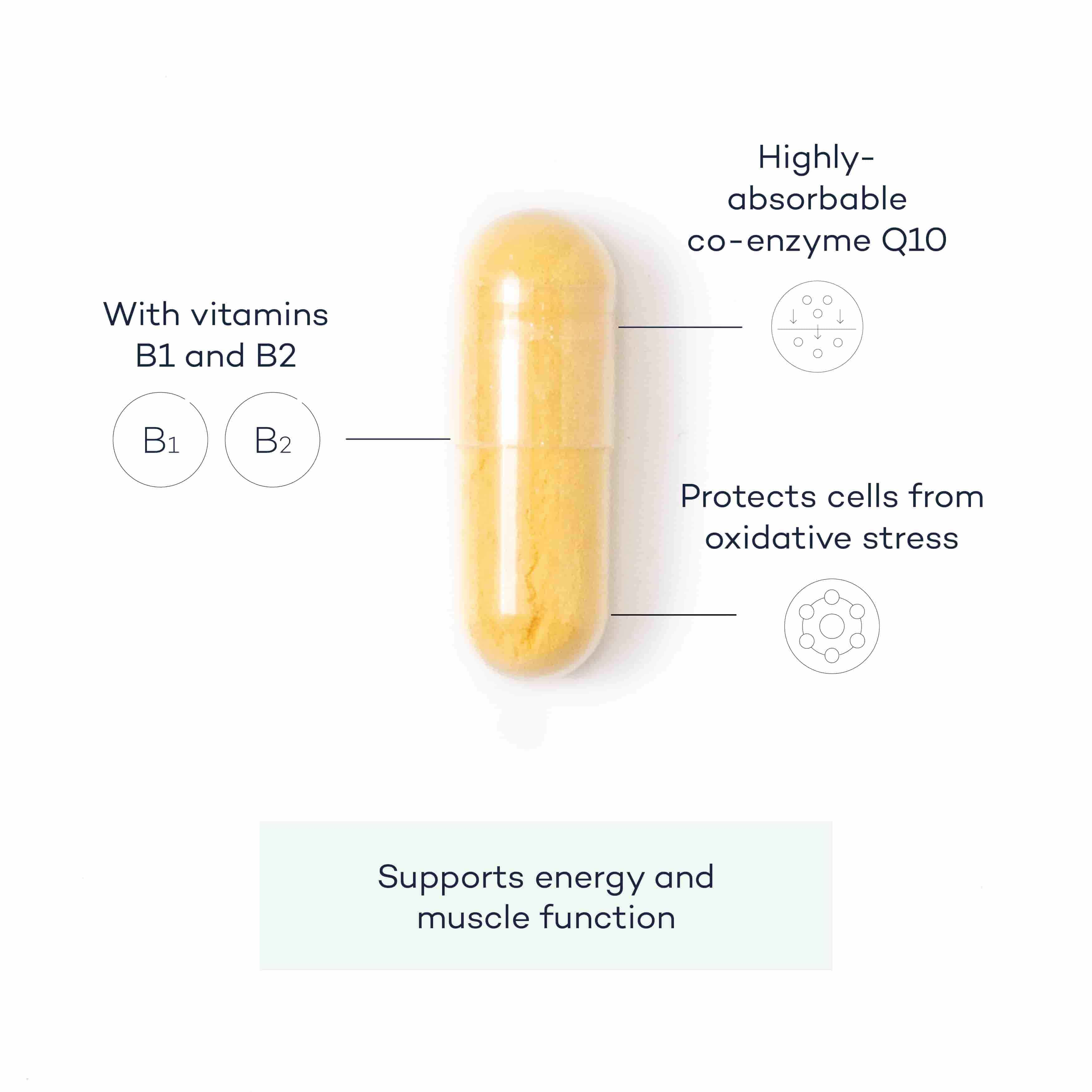
Taking a highly-absorbable CoQ10 supplement is the most efficient way to get this nutrient into your body. Adequate CoQ10 levels are essential for the proper functioning of our cells, but due to its natural crystalline structure it is poorly absorbed. A highly bioavailable supplement that changes this compound from fat-soluble to water-soluble results in significantly higher absorption of this critical co-enzyme. Formulations utilising Ubiqsome® phytosome delivery encapsulate CoQ10 in plant-derived phospholipids, delivering 9x higher absorption into blood plasma and muscle tissue compared to standard raw supplements.
CoQ10 and fertility: what the research really says
When it comes to reproductive health, cellular energy is everything. Both human egg and sperm cells require vast amounts of energy to mature, fertilise, and develop into healthy embryos. Inside these cells are tiny biological powerhouses called mitochondria, and coenzyme Q10 (CoQ10) is the essential spark plug that keeps them running.
Beyond fuelling energy production, CoQ10 also acts as a potent antioxidant, shielding delicate reproductive cells from oxidative stress caused by age, environment, and everyday lifestyle factors.
A growing body of systematic reviews and clinical meta-analyses now confirms that CoQ10 supplementation can play a valuable supportive role for both female and male fertility. Women undergoing IVF/IUI treatment, for example, are often encouraged to take CoQ10 to help with embryo quality and ovarian response (7).
Supporting female fertility & egg quality
An egg cell (oocyte) contains more mitochondria than virtually any other cell in the human body. As women age, natural levels of CoQ10 decline, which can reduce the energy available for critical stages of egg maturation and early cell division.
Recent systematic reviews and clinical studies evaluating women undergoing fertility care (such as IVF and ICSI) highlight several key areas of support:
- Ovarian response: Clinical research indicates that CoQ10 pretreatment helps support healthy follicular development, often leading to a higher yield of mature, viable eggs during assisted cycles – particularly for women with diminished ovarian reserve. (7).
- Embryo quality & fertilisation: By restoring mitochondrial energy, CoQ10 has been linked in clinical analyses to improved fertilisation rates and higher-grade embryo development. (7).
-
Antioxidant defence: CoQ10 protects developing eggs from oxidative damage, helping maintain cellular integrity through every stage of maturation.(8, 10)
There is some evidence to suggest that supplementing with CoQ10 could also help with male infertility. Oxidative stress (caused by lifestyle factors such as drinking alcohol, smoking, eating too much salt, sugar, fat and processed food) is thought to cause defective sperm function - which can be a major cause of male infertility. Research has shown that antioxidants, of which CoQ10 is one, can help reduce oxidative stress, as well as making positive lifestyle changes(8) such as regular exercise, eating a healthy diet and not smoking.
What causes CoQ10 deficiency?
Two major contributing factors to a CoQ10 deficiency are age and the use of statins: As we get older our ability to naturally produce CoQ10 reduces. Statin drugs can inhibit the body's natural production of CoQ10 during use. Statins are drugs widely used to prevent and treat some heart diseases. Statins block cholesterol synthesis, which is a key step for CoQ10 biosynthesis, and this pathway inhibition has been linked to a reduction of 20% to 50% in CoQ10 levels in the body (3)
For targeted support, discover how high-bioavailable CoQ10 helps replenish depletion from cholesterol management.
What are the symptoms of CoQ10 deficiency?
Whilst everyone is different, people who have a deficiency in CoQ10 levels often experience physical fatigue and muscle weakness, even while undertaking relatively non-strenuous physical activities such as walking. Low CoQ10 levels can also cause mental fatigue, with symptoms including difficulty in concentrating, and memory lapses. (1)
CoQ10 is an important antioxidant molecule, protecting the cell from oxidative stress. In disorders that are linked to increased oxidative stress, such as some retinal and neurological diseases, CoQ10 deficiencies might limit the body’s defences to counteract the damage caused by free radicals. This in turn could lead to a faster progression of the disease. (5) To learn more about how dietary antioxidants neutralise free radical damage, explore our guide to polyphenols and oxidative stress.
Benefits of taking a CoQ10 supplement
Since our bodies are able to make CoQ10 during youth, most young adults don’t need to top up their levels. However, as CoQ10 levels decline with age, with the use of cholesterol-blocking drugs (like statins), or due to some diseases, some people might find CoQ10 supplementation beneficial.
CoQ10 and SAMS (statin-associated muscle cramps)
While statins are generally well tolerated, a common side-effect is muscle aches and cramps, which are known as SAMS (statin-associated muscle symptoms). SAMS can be quite distressing, and they are often the main cause for stopping statin treatment. It is thought that SAMS are caused by the inhibition of cholesterol production, which is involved in CoQ10 production. (6). Recent data suggest that CoQ10 supplementation might be beneficial in preventing or treating SAMS, while having no effect on statin protective function. (3, 6)
Dr Miriam Ferrer’s perspective
"A high milligram dose of CoQ10 can be misleading. Standard generic capsules use raw crystals that quickly overwhelm the digestive system, meaning most of the dose goes to waste. Ubiqsome® solves this bottleneck by binding CoQ10 directly to cell-compatible fats rather than just encapsulating it. This 'Trojan horse' design allows the body to absorb it effortlessly, yielding nine times higher blood levels and superior uptake into muscle tissue for targeted mitochondrial energy where energy demands are highest."
Meet Dr Miriam Ferrer, Head of Product Development at FutureYou Cambridge.
Summary & references
In summary, evidence suggests that CoQ10 supplements may be beneficial for certain groups of people – those on statins, women undergoing IVF and those experiencing male infertility. While it can be obtained through diet, a highly-absorbable CoQ10 supplement like FutureYou Co-Enzyme Q10+ formulated with Ubiqsome® is an efficient way to get this nutrient into your body.
References
1. Hernandez-Camacho JD, Bernier M, Lopez-Lluch G, Navas P. Coenzyme Q10 Supplementation in Aging and Disease. Front Physiol. 2018; 9:44.
2. Barcelos IP, Haas RH. CoQ10 and Aging. Biology (Basel). 2019;8(2):28
3. Qu H, Meng YY, Chai H, Liang F, Zhang JY, Gao ZY, Shi DZ. The effect of statin treatment on circulating coenzyme Q10 concentrations: an updated meta-analysis of randomized controlled trials. Eur J Med Res. 2018; 2391): 57
4. Arenas-Jal M, Suñé-Negre JM, García-Montoya E. Coenzyme Q10 supplementation: Efficacy, safety, and formulation challenges. Compr Rev Food Sci Food Saf. 2020;19(2):574-594.
5. Manzar H, Abdulhussein D, Yap TE, Cordeiro MF. Cellular Consequences of Coenzyme Q10 Deficiency in Neurodegeneration of the Retina and Brain. Int J Mol Sci. 2020;21(23):9299
6. Raizner AE. Coenzyme Q10. Methodist Debakey Cardiovasc . 2019;15(3):185-191
7. Xu Y, Nisenblat V, Lu C, et al. Pretreatment with coenzyme Q10 improves ovarian response and embryo quality in low-prognosis young women with decreased ovarian reserve: a randomized controlled trial. Reprod Biol Endocrinol. 2018;16(1):29.
8. Bisht S, Faiq M, Tolahunase M, Dada R. Oxidative stress and male infertility. Nat Rev Urol. 2017;14(8):470-485.
9. Babayev E, Seli E. Oocyte mitochondrial function and reproduction. Curr Opin Obstet Gynecol. 2015;27(3):175-181.
10. Florou P, Anagnostis P, Theocharis P, Chourdakis M, Goulis DG. Does coenzyme Q10 supplementation improve fertility outcomes in women undergoing assisted reproductive technology procedures? A systematic review and meta-analysis of randomized-controlled trials. J Assist Reprod Genet. 2020;37(10):2377-2387.
Enjoy our health and nutrition articles? Add FutureYou Cambridge as a preferred source on Google to see more from us in your search results.





Leave a comment
All comments are moderated before being published.
This site is protected by hCaptcha and the hCaptcha Privacy Policy and Terms of Service apply.