





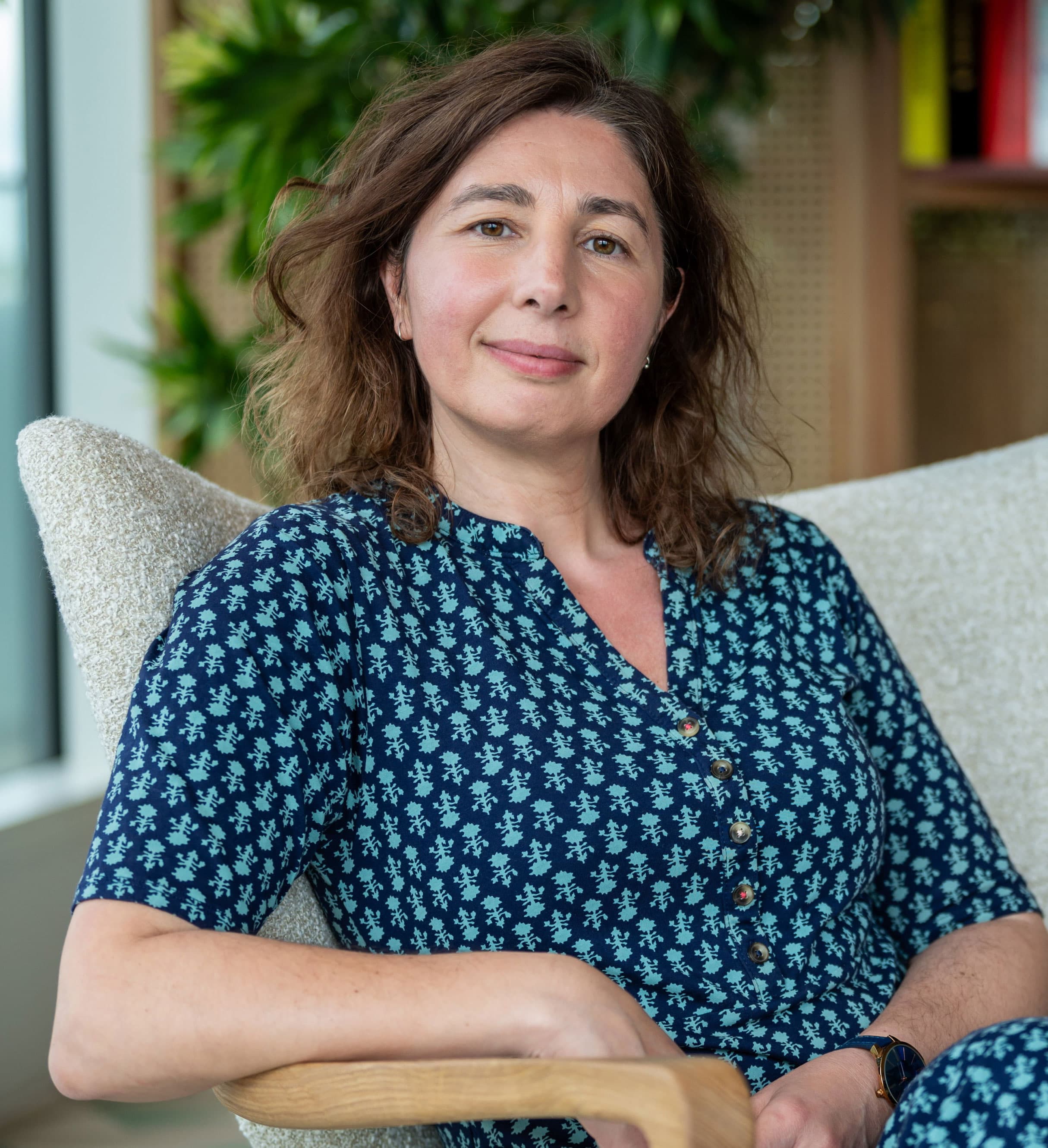
Head of Product Development
Dr Miriam Ferrer
Every FutureYou Cambridge supplement starts with a question: what does the science tell us?
Answering that question is a big part of Dr Miriam Ferrer's job. As our Head of Product Development, Miriam draws on more than two decades of experience in scientific research and the life sciences to scrutinise the evidence behind ingredients and help turn promising research into supplements people can trust.
Her scientific career began at the University of Barcelona, where she studied biology. After winning an Erasmus Fellowship, she spent a year studying biochemistry at Wageningen University in the Netherlands before moving to Vrije Universiteit Amsterdam to complete her PhD.
Her doctoral research explored the molecular mechanisms behind Fanconi anaemia, a rare genetic disorder, and their potential application in cancer gene therapy. Miriam then moved to Cambridge to take up a postdoctoral research position at the prestigious MRC Laboratory of Molecular Biology, where her work focused on BRCA1, a protein involved in DNA repair and breast cancer.
During her academic career, Miriam authored and co-authored seven published scientific papers, including research into Fanconi anaemia, DNA repair, cancer biology and chemotherapy response.
After leaving academic research, Miriam spent nine years at Abcam, a Cambridge-based global supplier of research tools for life scientists, working in roles including Business Development Associate and Product Manager for biochemical kits.
From research scientist to supplement scientist
Today, Miriam brings a researcher's mindset to her role at FutureYou Cambridge.
A large part of her job is evaluating the science behind potential ingredients. That means looking beyond an impressive headline or a promising laboratory result and asking harder questions. Has the ingredient been studied in people? How good was the study? What form was used? At what dose? Was the result genuinely meaningful? And can that evidence be translated into an effective supplement?
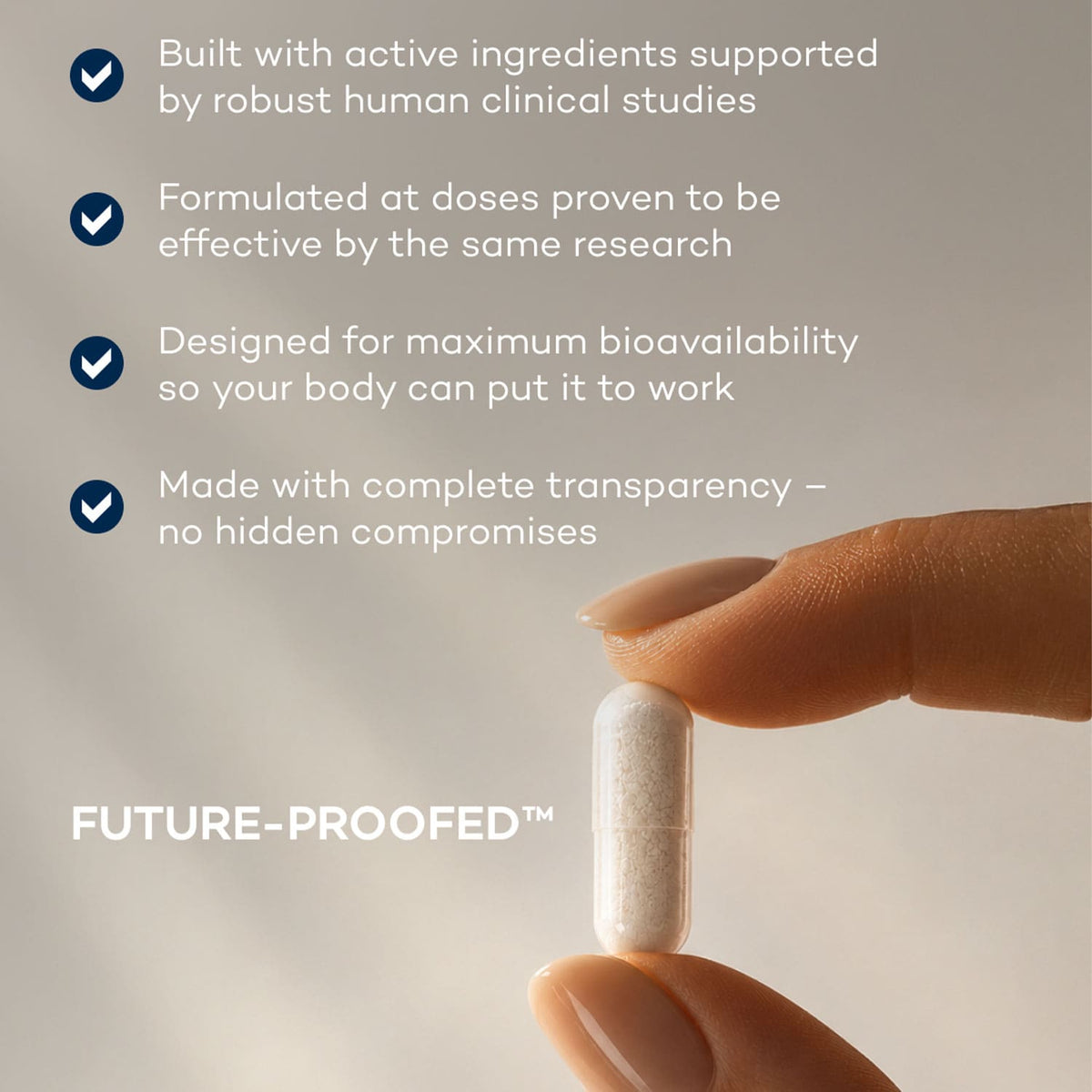
Her ability to critically evaluate research and separate promising science from marketing noise plays a key role in how we develop our products. It’s at the heart of Future-Proofed™, a set of standards every FutureYou Cambridge supplement has to meet.
Each is built only with active ingredients that are supported by robust human research, formulated at meaningful, effective doses, and in a bioavailable form to ensure your body can put them to work.
“The idea behind Future-Proofed™ is to set a much-needed standard for trust in the noisy and confusing world of nutritional supplements. You should be able to feel confident that the ingredients in your supplement have meaningful human research behind them.”

Published research
- van den Heuvel RH, Fraaije MW, Ferrer M, Mattevi A, van Berkel WJ. Inversion of stereospecificity of vanillyl-alcohol oxidase. Proceedings of the National Academy of Sciences USA. 2000;97(17):9455–9460.
- Ferrer M, Izeboud T, Ferreira CG, Span SW, Giaccone G, Kruyt FA. Cisplatin triggers apoptotic or nonapoptotic cell death in Fanconi anemia lymphoblasts in a concentration-dependent manner. Experimental Cell Research. 2003;286(2):381–395.
- Ferrer M, de Winter JP, Mastenbroek DC, Curiel DT, Gerritsen WR, Giaccone G, Kruyt FA. Chemosensitizing tumor cells by targeting the Fanconi anemia pathway with an adenovirus overexpressing dominant-negative FANCA. Cancer Gene Therapy. 2004;11(8):539–546.
- Ferrer M, Span SW, Vischioni B, Oudejans JJ, van Diest PJ, de Winter JP, Giaccone G, Kruyt FA. FANCD2 expression in advanced non-small-cell lung cancer and response to platinum-based chemotherapy. Clinical Lung Cancer. 2005;6(4):250–254.
- Ferrer M, Rodríguez JA, Spierings EA, de Winter JP, Giaccone G, Kruyt FA. Identification of multiple nuclear export sequences in Fanconi anemia group A protein that contribute to CRM1-dependent nuclear export. Human Molecular Genetics. 2005;14(10):1271–1281.
- Léveillé F, Ferrer M, Medhurst AL, et al. The nuclear accumulation of the Fanconi anemia protein FANCE depends on FANCC. DNA Repair. 2006;5(5):556–565.
- Medhurst AL, Laghmani el H, Steltenpool J, Ferrer M, et al. Evidence for subcomplexes in the Fanconi anemia pathway. Blood. 2006;108(6):2072–2080.