







I'm a scientist working inside the supplement industry. Scepticism is part of my job.
Before I joined FutureYou Cambridge as Head of Product Development, I spent years in academic research, first doing my PhD at the Vrije Universiteit in Amsterdam, and then postdoctoral research at the MRC Laboratory of Molecular Biology in Cambridge. Science teaches you not to start with the answer you want and look for evidence to support it. You ask a question, examine the evidence and stay prepared to change your mind.
So when Dr Xand van Tulleken says we should be more sceptical about supplements, I agree with him.
Too many supplements are sold with weak evidence, dubious claims and poor absorption. Bigger doses aren't always better and may even cause harm. A plausible biological mechanism doesn't prove that an ingredient will benefit people. And no supplement can compensate for a poor diet, inactivity or lack of sleep.
Where I disagree is the leap from “some supplements aren't supported by good evidence” to “supplements don't work”.
Instead, I think there are five questions we should all be asking before buying any supplement.
1. Do I actually need it?
Supplements should support a healthy diet, not replace one. If you're already getting enough of a nutrient, taking more won’t necessarily make you healthier.
Vitamin D is a good example. Large trials have found that giving additional vitamin D to generally healthy people doesn't produce many extra health benefits researchers once hoped for.
One major study Dr van Tulleken has discussed is VITAL, a large randomised controlled trial in the US. An analysis looking specifically at bone health found that taking 2,000 IU of vitamin D3 every day for two years did not improve overall bone density compared with placebo.
That's an important result, but the researchers themselves concluded that their findings did not apply to people with vitamin D deficiency or osteoporosis. Interestingly, they did identify a benefit for spine density in people with low vitamin D levels.
Dr van Tulleken himself acknowledges that vitamin D supplementation can be important for people at risk of deficiency, which is linked to rickets in children and bone pain and muscle weakness in adults. Around 1 in 6 adults and almost 20% of children in the UK have vitamin D levels lower than government recommendations. The NHS recommends that everyone should consider taking 10 micrograms of vitamin D a day during autumn and winter, with year-round supplementation advised for some groups.
So, the evidence doesn't tell us that vitamin D supplementation is pointless. It tells us that more isn't always better, and that supplements make most sense when there's a genuine nutritional need.
2. Has it actually been shown to work in people?
There's a big difference between showing that a supplement ingredient could be beneficial and demonstrating that it actually is.
Laboratory research can give scientists valuable clues about how ingredients interact with biological mechanisms, and observational research can suggest associations with health outcomes. But neither proves that taking a supplement will produce a meaningful benefit for people, which is why human clinical research matters.
FutureYou Cambridge was founded on that principle, with the development of LactoLycopene™, our own award-winning ingredient. Lycopene from tomatoes had already attracted scientific interest for its potential cardiovascular benefits, but what really mattered was proving that our more bioavailable version would actually make a difference. In a randomised placebo-controlled human study, LactoLycopene™ was shown to improve blood vessel function by 53% in people with cardiovascular disease after eight weeks, bringing their blood vessel function almost to the same level as the healthy group (Gajendragadkar, P. et al., PLoS One, 2014).
Since then, robust human clinical evidence has remained the fundamental requirement for the ingredients we include in our supplements. I always want to know: Who was studied? Was there an appropriate control? How long did the study last? And what did the researchers actually find?
3. Is it the same form and dose used in the research?
Finding a positive study on an ingredient isn't enough. I want to know whether the form we're using, at the dose we're using, matches the evidence.
Form matters because some ingredients are much easier for the body to absorb than others. Quercetin is a helpful plant polyphenol with antioxidant properties that is very poorly absorbed, so taking a large amount doesn't necessarily mean your body will use very much of it.
That's why our Immunity+ Advanced supplement uses Quercefit®, which combines quercetin with phospholipids to improve absorption. In a human study, Quercefit® delivered up to 20 times greater bioavailability than standard quercetin.
So when comparing supplements, don't just look for the biggest number on the label. Look at the form, how well your body can use it, and whether the dose reflects the research.
4. Does the claim match what the study actually found?
Scientific studies usually investigate very specific outcomes. Marketing has a habit of making them sound much bigger than they are.
If a study shows that an ingredient changes a particular biomarker, that doesn't automatically mean it prevents disease. If something supports normal immune function, that doesn't mean you'll never catch a cold. And increasing levels of a molecule associated with healthy ageing isn't the same thing as proving that people will live longer.
Whenever you see an impressive health claim, look at what the study actually measured. Good science means being clear about what research shows, and what it doesn't.
5. Do I trust the people interpreting the evidence?
Very few of us have the time or inclination to spend our evenings reading clinical papers. Even scientists can disagree about how research should be interpreted – so trust really matters.
That’s why I think supplement companies should be prepared to show you their evidence rather than simply telling you that something is “science-backed”.
Can they tell you what was studied? Can they explain why they've chosen a particular dose? Do they acknowledge the limitations of the research? Can they explain why an ingredient is in the product in the first place? And are they comfortable with scientific uncertainty?
At FutureYou Cambridge, we also provide our supplements free of charge to independent university researchers who want to investigate interesting new health questions.
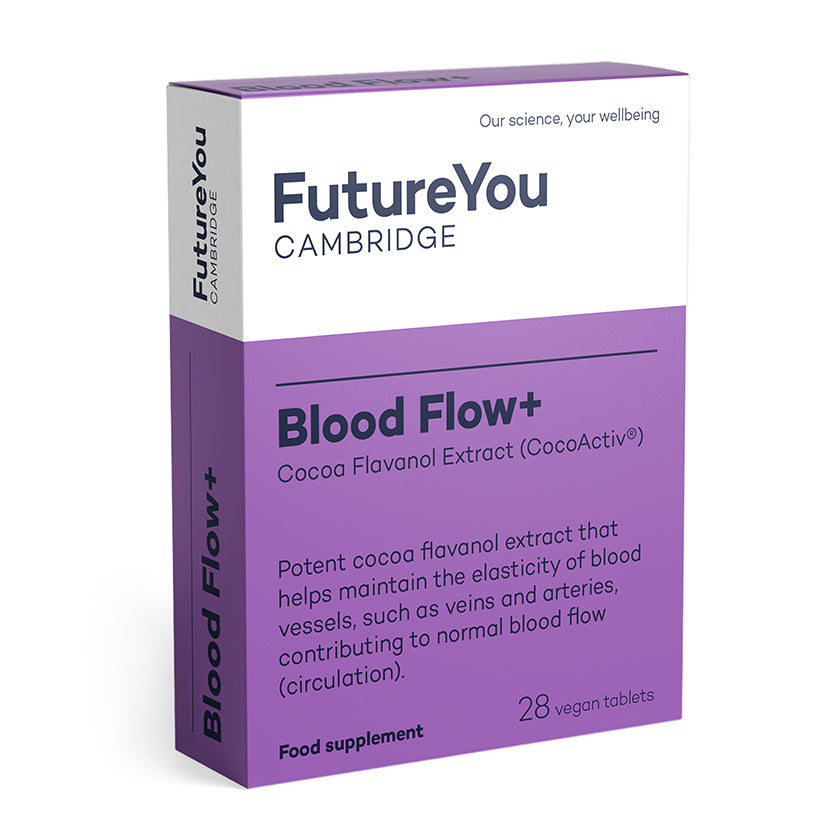
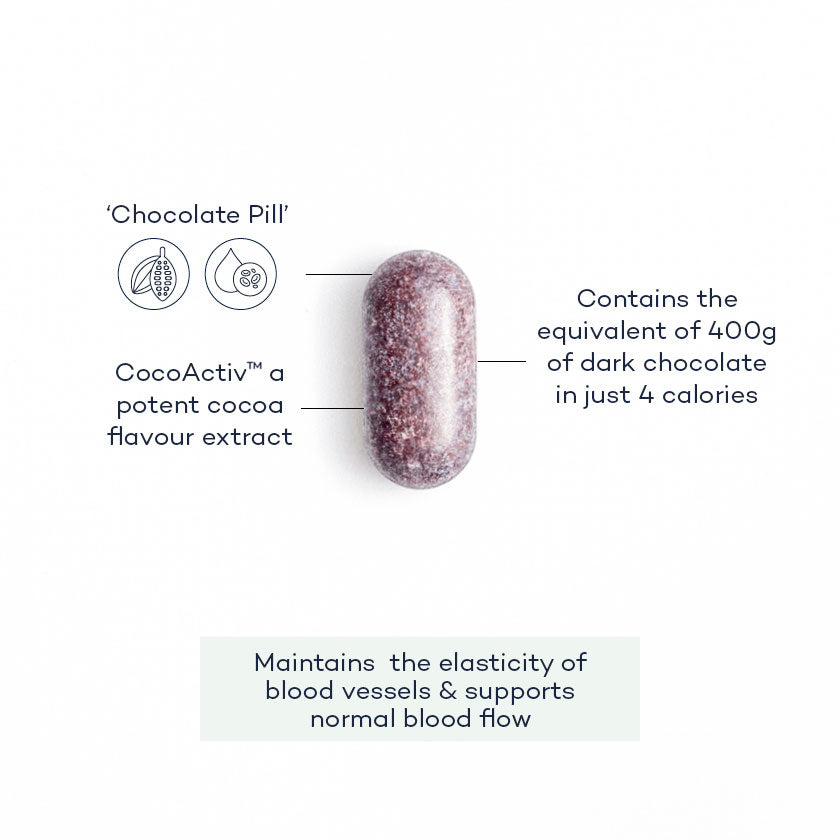
Researchers at Cardiff Metropolitan University are currently using our LactoLycopene™ and Blood Flow+ formulations to explore questions ranging from blood flow in the brain to sports performance and recovery. We've also supplied Cool Joints+ for exploratory research at Liverpool John Moores University investigating a potential role for Boswellia in anorexia nervosa, an area that has nothing to do with the joint-health purpose for which we developed and sell the supplement.
We don't know what those studies will find – and that's the point. Good research doesn't start with the result you want to find. We're happy to support independent researchers by supplying our supplements free of charge, but the research has to remain theirs. We don't influence the study or know what the results will be.
The questions behind Future-Proofed™
These are the questions my team and I ask when we're developing a FutureYou Cambridge supplement, and we've now given these standards a name: Future-Proofed™.
Every Future-Proofed™ supplement has to meet four principles:
Evidence: Is the active ingredient supported by robust human clinical studies?
Dose: Are we using an amount that reflects what the research shows?
Form: Can the body absorb and use it effectively?
Transparency: Can we explain exactly why it's there and what the evidence does, and doesn't, show?
I don't think the answer to a confusing supplement industry is to stop asking questions and throw everything in the bin. Instead, I think we should be asking better questions.
Good supplement companies should be trying to help you answer them clearly and honestly. Not every supplement will stand up to scrutiny, but the ones you spend your money on should.
Dr Miriam Ferrer, PhD, is Head of Product Development at FutureYou Cambridge. Miriam completed her PhD in cancer biology at Vrije Universiteit Amsterdam before embarking on postdoctoral research at the Medical Research Council Laboratory of Molecular Biology in Cambridge. She later spent six years as a Product Manager at life sciences company Abcam before joining FutureYou Cambridge.





Leave a comment
All comments are moderated before being published.
This site is protected by hCaptcha and the hCaptcha Privacy Policy and Terms of Service apply.