



To deliver real health benefits, an effective NAD+ supplement also has to help your body put it to use, explains pharmacist and nutritionist Aidan Goggins, author of The Sirtfood Diet.
NAD+ has become a celebrity nutrient, praised in headlines everywhere as a ‘longevity molecule’ and even a ‘metabolic miracle’.
The excitement is understandable: NAD+ is at the heart of how our cells convert food into energy, repair DNA, and respond to stress. It’s the essential fuel for metabolic, cognitive, and physical resilience.1,2
But NAD+ availability tends to decline with age by up to 50 per cent, according to research. This decline is closely linked to reduced metabolic health, impaired function of our mitochondria – the ‘powerhouses’ that drive our cells – and all the classic features of ageing that can leave us feeling low in energy and mood.1,2
Can NAD+ supplements help? On one level, NAD+ supplements do exactly what they promise: NAD+ precursors like nicotinamide riboside (NR) or nicotinamide mononucleotide (NMN) have been shown in human studies and clinical reviews to reliably raise NAD-related metabolites in blood, often within weeks.3,5
But lost in all the excitement is an inconvenient fact: raising your NAD+ level does not automatically lead to better health. Like many things in biology, the truth is more complex than a single ‘magic bullet’ solution. To really deliver the benefits of NAD+, an effective supplement also has to help your body put it to use.
The tug-of-war over your NAD+ supply
To understand the benefits of NAD+, you also need to understand a family of enzymes called sirtuins.
If NAD+ is the fuel for our cells, then sirtuins are our cells’ engines. They drive mitochondrial efficiency, essential repair programmes and metabolic flexibility. Important for healthy ageing, sirtuins depend on a good NAD+ supply in order to work. Without this fuel, the engines will sit idle.1,2
However, the sirtuins don’t get all of the body’s NAD+ to themselves. In every cell, they’re in a constant tug-of-war for fuel with two other aggressive enzyme families:
- PARPs: enzymes involved in DNA repair that consume NAD+
- CD38: an enzyme involved in immune response that can act as a major NAD+ ‘drain’ as we age.
As we age, more and more ‘senescent’ or damaged older cells build up in our tissues, and release inflammatory secretions that harm healthy cells. This drives immune cells to increase levels of CD38, which needs NAD+ to function.4
Over time, this can create a ‘biological sinkhole’, where more and more NAD+ gets pulled into supporting CD38, leaving less for the sirtuin engines to fuel their work of renewal and repair.1,2,4
What the average NAD+ supplement can – and can’t – do
So, does simply topping up your NAD+ levels through supplementation provide enough fuel to overcome the drain from CD38 and PARPs?
This replenishment strategy has been tested in rigorous clinical studies, with encouraging results. When NAD support is provided in the right context, researchers observed measurable improvements, including:
- Metabolic health: improved muscle insulin sensitivity in a study of prediabetic women.7
- Physical function and ageing: in older adults, increased blood levels of NAD was associated with maintained walking speed and improved sleep quality in a controlled trial.8
- Cardiovascular resilience: Nicotinamide riboside (NR) has been shown to raise NAD metabolites in healthy middle-aged and older adults, with potential links to blood pressure still to be confirmed in larger trials.5
These studies confirm that the idea of using a supplement to support NAD+ is sound. However, other studies have not shown the same benefits.
If your cellular environment is inflamed, stressed, or heavily damaged, any extra NAD+ you add through supplementation can just be drained into the ‘sinkhole’, supporting CD38 levels rather than long-term health.
Recent meta-analyses have shown that supplementation often fails to produce significant health benefits across a spectrum of metabolic measures – such as blood sugar or cholesterol – even when blood NAD+ levels rise significantly.3 This shows that just topping up the NAD+ fuel tank is not enough.
The best NAD+ supplements create the right environment for NAD+ to work
A dual-action approach is essential for an effective NAD+ supplement. As well as topping up NAD+ levels, it needs to help ensure the cellular environment is ready to use it.
A group of potent plant nutrients called polyphenols have been shown to influence gene expression and signalling pathways that can support sirtuin activity and stress resilience.9,10
Often referred to as ‘sirtfoods’, polyphenol-rich ingredients include kale, parsley, olive oil, walnuts, turmeric, dark chocolate, green tea, coffee, red wine and blueberries. Sirtfoods typically feature in the diets of long-lived populations – for example, traditional Okinawan and Mediterranean-style diets.
Two specific ingredients are particularly useful for optimising the NAD environment, both included in FutureYou Cambridge’s NAD+ Advanced formulation.
- Resveratrol: A polyphenol found in red grape skins, resveratrol helps activate stress-response pathways, supporting ‘engine readiness’ for repair and maintenance when NAD is available.9,10
- Green Tea Extract: Green tea catechins, particularly EGCG, support antioxidant defences and reduce CD38 activity directly.9,10 This can help reduce chronic inflammation so that extra NAD support is used where you want it, rather than being lost to ongoing cellular stress.1,2,4
By supporting both the fuel and the environment that decides how that fuel is spent, NAD+ Advanced aims to improve metabolic, cognitive, and physical resilience, rather than simply shifting a blood marker.
Everyday ways to support your NAD+ levels and cell health
You can support your cell health through lifestyle habits that act as powerful NAD regulators.
- Drink some coffee: Your morning brew is the richest natural source of trigonelline15, a unique NAD precursor that tops up your supply via a completely different biological route than standard supplements14. This makes coffee a perfect partner to a supplement, opening a second ’supply route’ into the cell. Just opt for light roasts, as heavy roasting tends to degrade this valuable molecule.
- Exercise: Endurance and resistance training can improve the body’s ability to recycle NAD in skeletal muscle. Exercise is consistently linked with improved mitochondrial function and metabolic flexibility, where NAD-sirtuin biology matters.16,17
- Protect your sleep: The enzyme that recycles NAD (NAMPT) is under circadian regulation, linking sleep-wake rhythms to NAD availability and sirtuin-related signalling.18 Without regular, restful sleep, your body’s ability to generate and recycle NAD becomes reduced.
- Eat a polyphenol-rich diet: A plant-rich diet is one of the simplest ways to support NAD. Choose foods loved in the Sirtfood-dense diets of the Blue Zones i.e., extra-virgin olive oil, dark berries, cocoa, richly coloured vegetables, herbs and spices.11-13
The potential benefits of the average NAD+ supplement may end up being lost down the ‘sinkhole’. But combined with a healthy lifestyle and polyphenol-rich foods, NAD+ Advanced helps create the right cellular environment so your NAD+ gets used where it matters most, supporting energy, repair, and resilience as you age.
Nutritional support

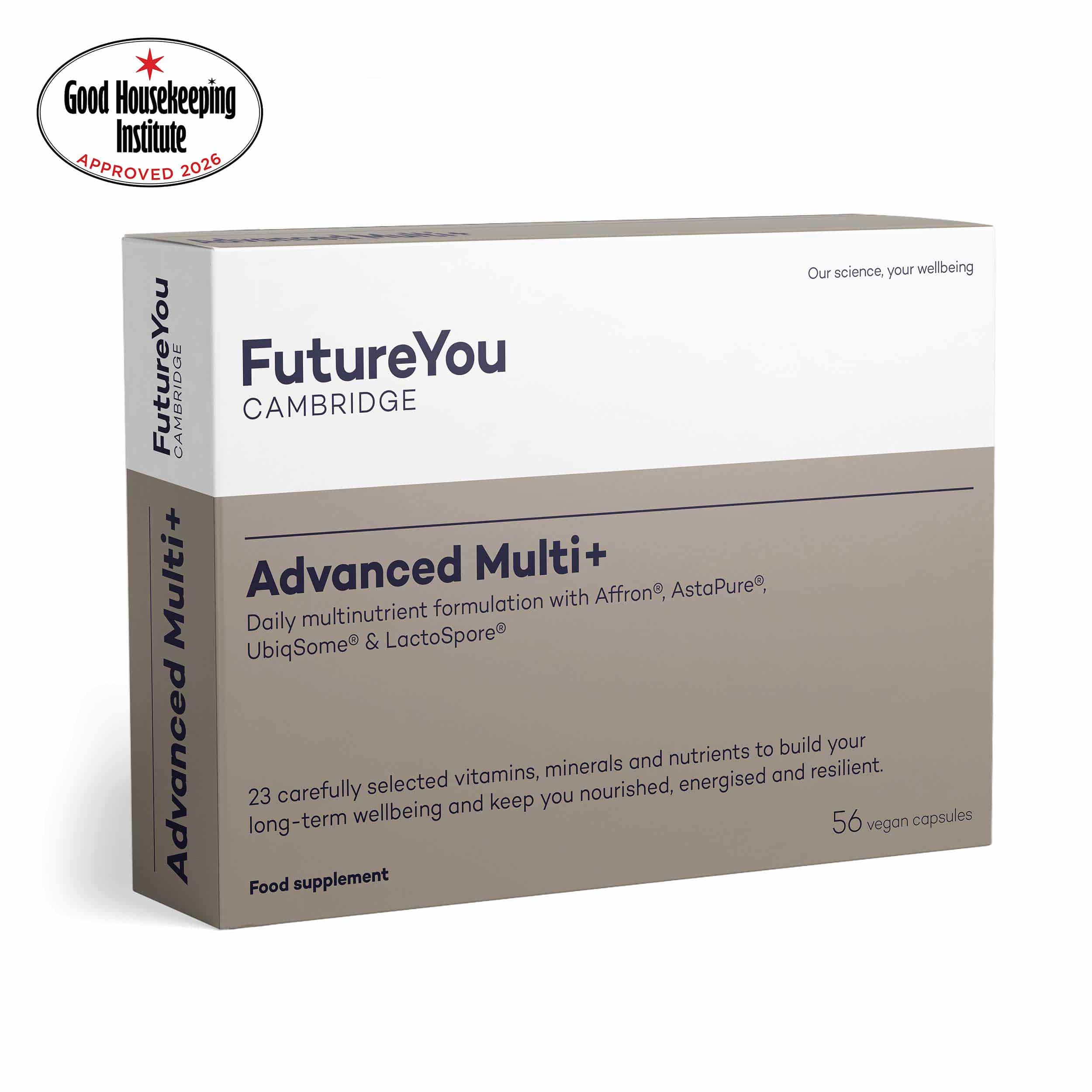
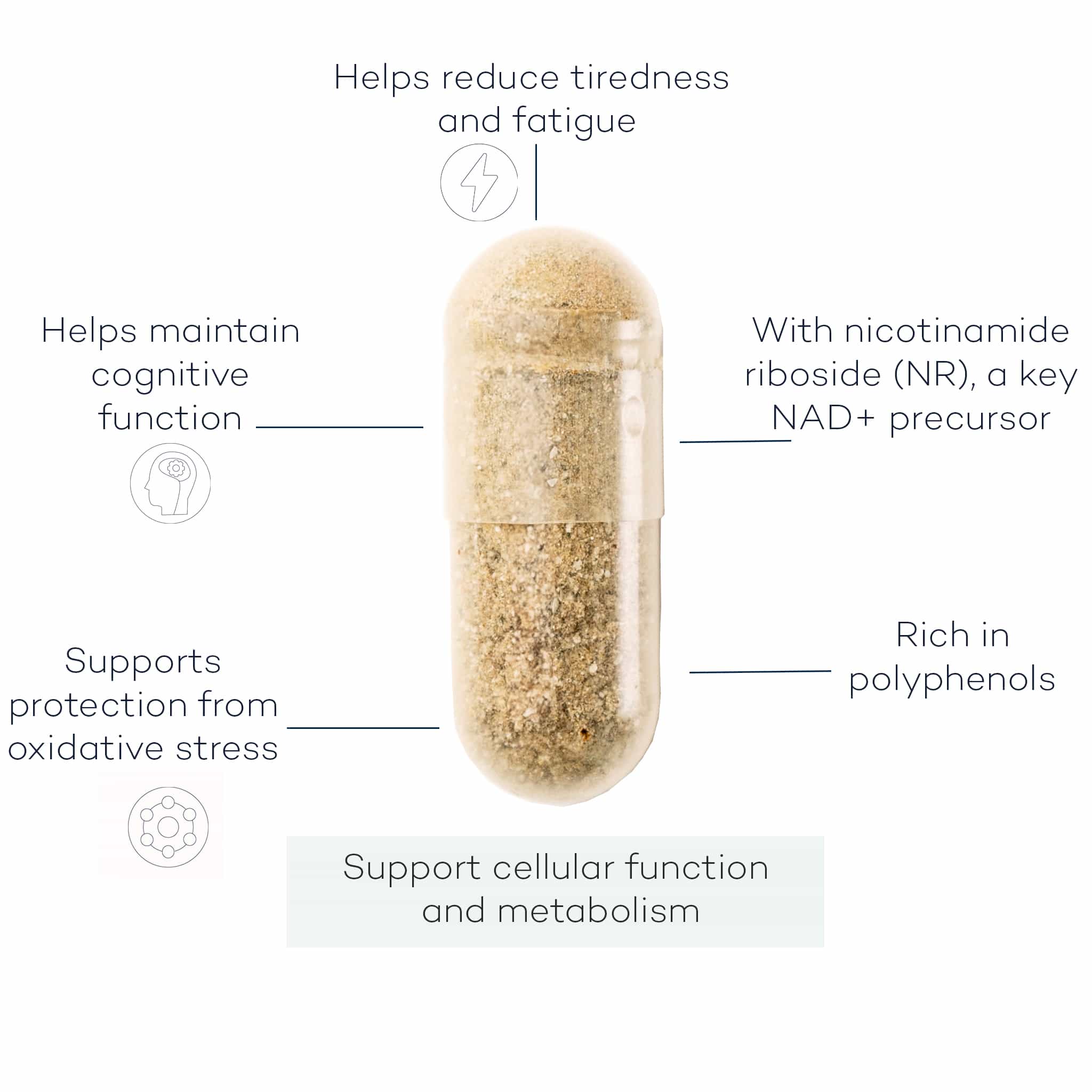
NAD+ Advanced protects cellular health and promotes daily energy as you age by raising your NAD+ levels with nicotinamide riboside, a proven NAD precursor, plus powerful polyphenols.
See how it worksReferences
1. Covarrubias AJ, Perrone R, Grozio A, Verdin E. NAD+ metabolism and its roles in cellular processes during ageing. Nature Reviews Molecular Cell Biology. 2021;22:119–141. doi: 10.1038/s41580-020-00313-x.
2. McReynolds MR, Chellappa K, Baur JA. Age-related NAD+ decline is a normal consequence of physiology. Experimental Gerontology. 2020;134:110888. doi: 10.1016/j.exger.2020.110888.
3. Freeberg KA, Udovich CC, Martens CR, Seals DR, Craighead DH. Dietary Supplementation With NAD+-Boosting Compounds in Humans: Current Knowledge and Future Directions. The Journals of Gerontology: Series A. 2023;78(12):2435–2448. Doi: 10.1093/gerona/glad106.
4. Covarrubias AJ, Kale A, Perrone R, et al. Senescent cells promote tissue NAD+ decline during ageing via the activation of CD38+ macrophages. Nature Metabolism. 2020;2:1265–1283. doi: 10.1038/s42255-020-00292-9.
5. Martens CR, Denman BA, Mazzo MR, et al. Chronic nicotinamide riboside supplementation is well-tolerated and elevates NAD+ in healthy middle-aged and older adults. Nature Communications. 2018;9:1286. doi: 10.1038/s41467-018-03421-7.
6. Dollerup OL, Christensen B, Svart M, et al. High-dose nicotinamide riboside and metabolic outcomes in obese insulin-resistant men (randomised trial). The American Journal of Clinical Nutrition. 2018;108(2):343–353. doi: 10.1093/ajcn/nqy142.
7. Yoshino M, Yoshino J, Kayser BD, et al. Nicotinamide mononucleotide increases muscle insulin sensitivity in prediabetic women. Science. 2021;372(6547):1224–1229. doi: 10.1126/science.abe9985.
8. Morifuji M, Higashi S, Ebihara S, Nagata M. Ingestion of β-nicotinamide mononucleotide increased blood NAD levels, maintained walking speed, and improved sleep quality in older adults in a double-blind randomized, placebo-controlled study. GeroScience. 2024;46(5):4671–4688. doi: 10.1007/s11357-024-01204-1.
9. Iside C, Scafuro M, Nebbioso A, Altucci L. SIRT1 Activation by Natural Phytochemicals: An Overview. Frontiers in Pharmacology. 2020;11:1225. doi: 10.3389/fphar.2020.01225.
10. Tomczyk M, et al. Natural Phytochemicals as SIRT Activators: Focus on Potential Biochemical Mechanisms. Nutrients. 2023;15(16):3578. doi: 10.3390/nu15163578.
11. (MDPI) Sirtfoods: A New Nutritional Concept. Foods. 2022;11(19):2955. doi: 10.3390/foods11192955.
12. Davinelli S, Medoro A, Hu J, Sun J, Scapagnini G. Dietary polyphenols as geroprotective compounds: From Blue Zones to the hallmarks of ageing. Ageing Research Reviews. 2025;102733. doi: 10.1016/j.arr.2025.102733.
13. Pallauf K, et al. The “MediterrAsian diet” as a “nongenetic modulator of the aging process”. Oxidative Medicine and Cellular Longevity. 2013:707421. doi: 10.1155/2013/707421.
14. Nature Metabolism (2024). Trigonelline identified as a novel NAD precursor via the Preiss–Handler pathway. doi: 10.1038/s42255-024-00997-x.
15. Farah A, et al. Kinetics of Trigonelline Degradation in Coffee Roasting and its Relation to Colour and Other Quality Parameters. Journal of Agricultural and Food Chemistry. 2014. doi: 10.1021/jf403846g.
16. Crozier SJJ, et al. Aerobic and resistance exercise training reverses age-dependent decline in NAD+ salvage capacity in human skeletal muscle. Physiological Reports. 2019;7:e14139. doi: 10.14814/phy2.14139.
17. Vargas-Ortiz K, Pérez-Vázquez V, et al. Exercise and Sirtuins (SIRT1/SIRT3) in skeletal muscle and metabolic health (review). International Journal of Molecular Sciences. 2019;20(11):2717. doi: 10.3390/ijms20112717.
18. Ramsey KM, Yoshino J, Brace CS, et al. Circadian clock feedback cycle through NAMPT-mediated NAD+ biosynthesis. Science. 2009;324(5927):651–654. doi: 10.1126/science.1171641.


Leave a comment
All comments are moderated before being published.
This site is protected by hCaptcha and the hCaptcha Privacy Policy and Terms of Service apply.