





From DNA to nutrition, women have played a vital role in shaping modern science.
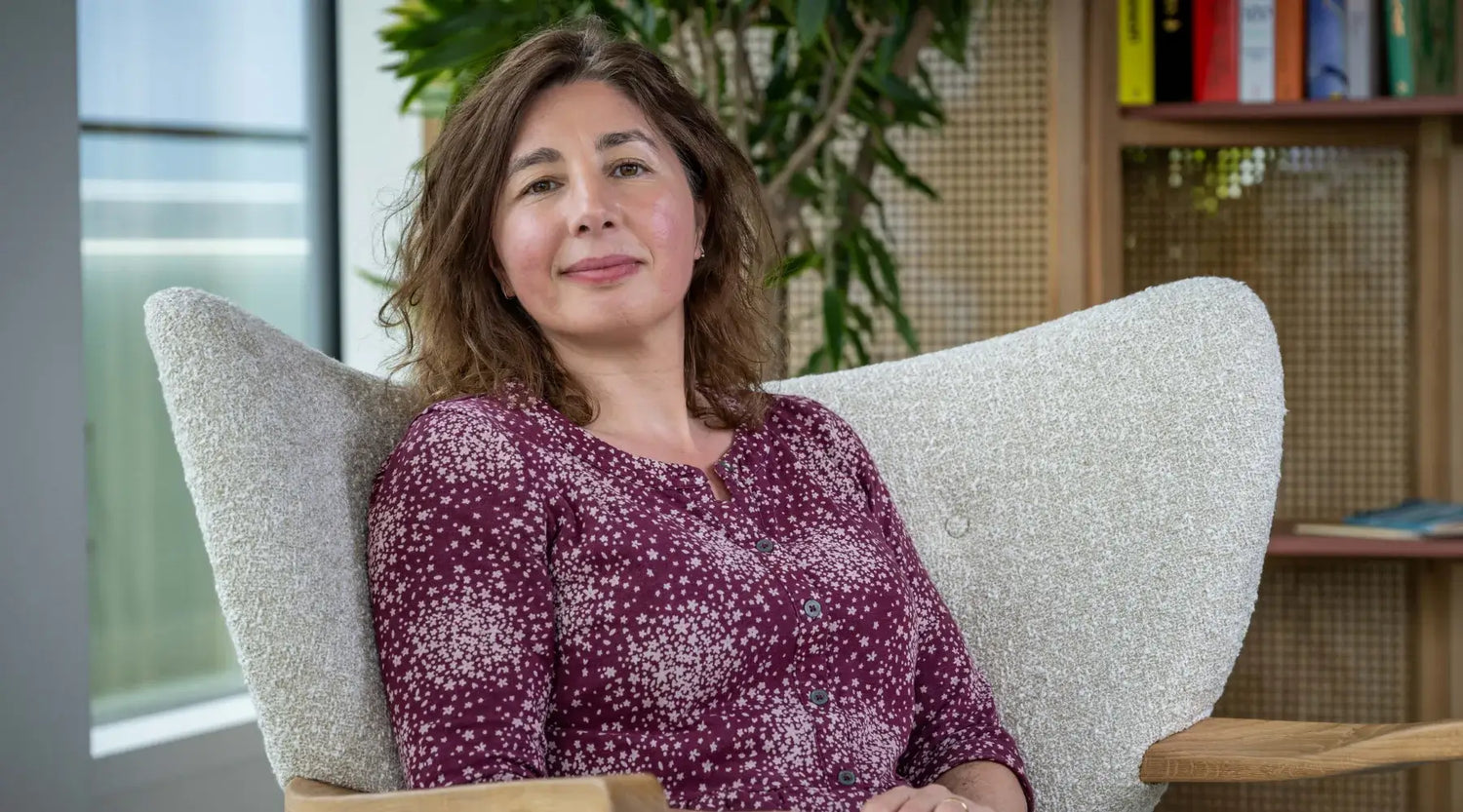
This International Women’s Day, Dr Miriam Ferrer, Head of Product Development at FutureYou Cambridge, reflects on the Cambridge legends who have inspired her – and why science still needs more.
In 2005, I was fortunate enough to become a postgraduate researcher at the Medical Research Council Laboratory of Molecular Biology (LMB) in Cambridge, a prestigious research lab dedicated to tackling major problems in human health and disease. Here, I spent three and a half years investigating BRCA1, a protein associated with breast cancer.
The LMB is famous for being the birthplace of modern molecular biology, with a history dating back to 1947. Many scientific techniques were pioneered here, including DNA sequencing, methods for determining the three-dimensional structure of proteins, and the development of monoclonal antibodies, a key tool for therapy and research.
It’s also renowned as a ‘Nobel Prize factory’. The first thing I felt when I walked into the lab was sheer awe at the proudly displayed portraits of all the Nobel Prize winners the LMB had produced over the years. It now has 16 Nobel laureates, and all of them are men.
That shouldn’t come as a surprise. Out of the 658 Nobel Prize winners for science to date, just 26 are women. Women have been underrepresented in STEM (science, technology, engineering and mathematics) roles for many years, both in university and in industry. Very slowly, it’s improving. Women now account for around 29 per cent of the UK’s STEM workforce. But they’re still less likely to reach leadership positions in STEM roles, and suffer the worst STEM pay gap in Europe, earning nearly 20 per cent below men.
How fewer women in science impacts women's health
The lack of women working in science has had a knock-on effect on our understanding of women’s health. Women have long been excluded as research subjects because their fluctuating hormones are considered ‘inconvenient’ variables that muddy the data. This in turn has had an effect on diagnoses and treatments for women. Even today, women are 50 per cent more likely than men to receive the wrong initial diagnosis for a heart attack, for example, or more likely to be prescribed sedatives for pain instead of painkillers.
Women have been working to redress the balance with projects like The Million Women Study, a five-year health study of 1.3 million UK women aged 50-64. But we still need more women working in science. I feel fortunate to be part of the team at FutureYou Cambridge, where women’s contributions to science, and every part of our business, are valued and embraced. But across the wider STEM world, there’s still work to do.
So, what’s stopping us? Apart from the unfair differences in pay, there’s a wide range of reasons, from a culture of long, punishing hours that doesn’t leave much time for taking care of a family, to the nerdy and often male-dominated stereotypes that end up deterring many girls from taking up STEM subjects at school.
The science legends who have inspired me
But there are many amazing role models for girls who are fascinated by science, for example these Cambridge researchers working to change the gender bias in health research. To celebrate this International Women’s Day, I’d like to share the stories of five Cambridge science legends who still inspire me, and I hope will inspire you, too.

Rosalind Franklin
Although she was based at King's College in London, her X-ray diffraction image, ‘Photograph 51’, had a major impact on Cambridge science. One of the most important scientific images ever taken, it provided vital evidence for scientists Francis Crick and James Watson in confirming the double-helix structure of DNA, announced in 1953. Crick and Watson worked in the Cambridge research unit that later became the Laboratory of Molecular Biology. Rosalind's essential contribution to their Nobel Prize-winning discovery was long denied and overlooked.

Dorothy Crowfoot Hodgkin
When X-rays pass through a crystal, it forms patterns that can be captured as photographic images used to work out its structure. Also using X-rays, complex calculations and analysis, Dorothy Crowfoot Hodgkin was able to understand the structure of penicillin in 1946, followed by vitamin B12. Her crucial work helped paved the way for producing more effective antibiotics and other treatments. She was awarded a Nobel Prize for Chemistry in 1964.

Kamala Sohonie
Kamala’s dogged pursuit of science in the face of gender bias led her to become the first woman to be admitted to the Indian Institute of Science, breaking a path for others to follow. She was then invited to Cambridge, where she became the first Indian woman to get a PhD in a scientific discipline, in 1939. As a biochemist, she discovered the enzyme 'Cytochrome C', in a major contribution to understanding how living cells generate energy. She later returned to India, where her award-winning work on Neera, a palm extract, helped fight childhood malnutrition among tribal communities in India.

Dorothy Needham
ATP (adenosine triphosphate) is a vital molecule that gives our cells the energy they need to function. In the 1930s, Dorothy Needham was involved in pioneering work on identifying how ATP helps make our muscles contract. A lifelong humanitarian, Dorothy also researched the effects of chemical weapons, and helped found Lucy Cavendish College in 1965, dedicated to admitting women and students from underrepresented backgrounds.

Elsie Widdowson
Elsie is renowned for her groundbreaking work in nutrition but, as she pointed out: “Nutrition as a subject did not exist when I started.” In 1940, she and her scientific partner Robert McCance created the “Nutritionists’ Bible” that’s still in use today: McCance and Widdowson’s The Composition of Foods, the official UK reference for the nutrient content of food. Their work shaped wartime rationing in World War II, and led to fortifying food with vitamins and minerals, starting with putting calcium into bread.
Dr Miriam Ferrer, PhD is Head of Product Development at FutureYou Cambridge.








Leave a comment
All comments are moderated before being published.
This site is protected by hCaptcha and the hCaptcha Privacy Policy and Terms of Service apply.